Promotional video about preventative maintenance:

Condition monitoring has made significant advances in recent years and now plays a key role in maintenance operations, whether for continuously operating machinery or load-bearing structures that need to meet stringent requirements. With advanced measurement equipment, data-driven analysis (IoT) and non-destructive testing (NDT) the condition of equipment and structures can be closely monitored and action can be taken before deviations lead to failures or costly operational downtime.
HD provides a comprehensive service in condition monitoring and non-destructive testing for the industrial, maritime and energy sectors. Using advanced technology, artificial intelligence and certified expertise, we detect anomalies early, assess the condition of critical structures, and support targeted decisions on maintenance and ongoing operations.
The objective is clear: to extend the lifespan of equipment, ensure operational security and minimise unexpected downtime.
Contact:
Gísli Arnar Guðmundsson
astandsgreiningar@hd.is
Tel: 844 0313
The following are common hardware faults:
Vibration measurements are one of the most effective methods for assessing the condition of machinery. By analysing the frequency pattern (FFT spectrum analysis) Data are processed in specialised software where deviations are compared with known failure patterns.
Thus, uterine failure, misalignment, imbalance and other defects can be detected at an early stage, before the downtime becomes significant.
HD offers both scheduled measurements and continuous monitoring, as well as installation and data processing as part of a service contract.
HD staff are trained in Vibration Analysis to ISO 18436.
Promotional video about preventative maintenance:
Continuous monitoring systems collect data continuously in real time and automatically detect anomalies. Sensors are permanently installed and send data to an analysis system that monitors trends over time.
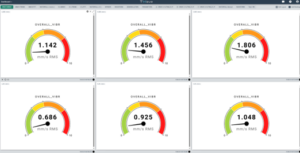
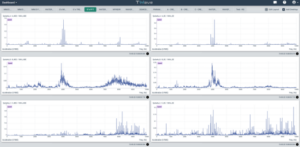
HD offers continuous monitoring with IoT and LoRa X2 solutions, where sensors collect data in real time, for example, on vibration and temperature. It is also possible to measure other values, such as current draw, humidity, pressure and more. The data is accessible both in a browser and on smart devices, showing both the current status and a history of measurements since the equipment was installed.
Finally, the data can be transferred to an AI application for detailed and precise analysis, along with regular reporting. This provides business owners with better oversight and peace of mind.
Continuous monitoring improves oversight, response, and reduces the likelihood of unexpected failures.
Promotional video about el-Watch:
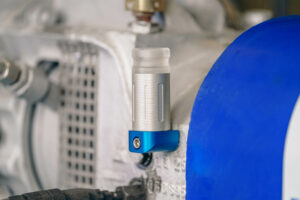
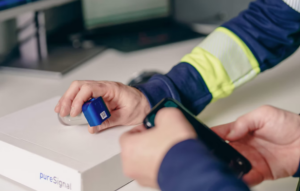
See also a further presentation of the different el-Watch solutions at YouTube.
Promotional videos about TWave:
Airborne Ultrasound is used to detect high frequencies that indicate the first signs of failure, especially in bearings.
The method is also used to detect air and fluid leaks, e.g. in noisy engine rooms and the drainage systems of hydroelectric power stations.
High-frequency listening is well-suited to noisy industrial environments and supports preventative maintenance by detecting anomalies before they develop into serious failures.
HD staff are trained in Airborne Ultrasound, Level 1.
VideoWhy does high-frequency listening work well?
HD offers machinery health diagnostics using equipment that analyses electrical signals from motors and generators. The method is based on monitoring electrical power consumption in real time and detecting behavioural anomalies without the need for conventional vibration measurements or staff attendance.
The system learns the normal operation of the machinery and automatically detects any anomalies, such as imbalances, misalignments or wear. It can pinpoint exactly where deviations are occurring and what needs to be examined more closely.
This method can also be used to detect energy waste due to faults – for example, an imbalance can lead to increased energy consumption and higher running costs.
Introduction to the Artesis e-MCM condition monitoring system
See further information on the different solutions from Artesis at YouTube.
A thermal imaging camera can detect radiation from a component's surface and display it in a visual representation, providing a clear overview of any potential anomalies. The method is particularly useful for detecting abnormal heat generation in electrical equipment, machinery, and connections.
However, it is important to bear in mind that thermal images only show radiation from a surface – for example, it is not possible to image an electrical component through glass, as only the radiation from the glass itself is visible.
The applications of thermal cameras are extensive. Thermal imaging provides a good insight into the condition of motor connections, switches, junction boxes and other electrical components.
A promotional video shows an example of fault diagnosis using thermal cameras.